
Community
Community Spotlight: Women's Ministry of United Christian Church Christmas Bazaar
By Samantha Lee
Advertisement · Why this ad?
Samantha is a dedicated community journalist with a Master’s degree in Journalism from Columbia College Chicago. Having previously reported for the Chicago Tribune's local news section, she brings a wealth of experience in covering community events and issues that matter to Bloomington residents.
More from Samantha →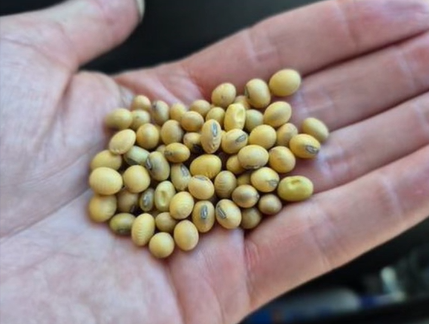
On a crisp autumn morning in Bloomington, Illinois, farmer Mark Jensen steps into his soybean field, eyes gleaming with a mixture of curiosity and pride. Instead of the familiar golden pods, his harvest reveals a surprising palette—hues of green, purple, and even a hint of reddish-brown. For Jensen, this isn’t just an anomaly; it’s a testament to the evolving story of agriculture in Central Illinois, where tradition meets innovation amid the rolling fields. Jensen, who has been farming in McLean County for over 30 years, recalls when soybeans were predominantly uniform in appearance. The recent shift to multicolored beans reflects broader changes driven by genetic research, environmental factors, and market demands that are reshaping local farming practices.
Typically, soybeans are known for their uniform yellowish appearance, a staple in kitchens and factories across the country. But this year, some farmers like Jensen are noticing soybeans of other colors—an occurrence that has sparked both curiosity and questions among the community. The phenomenon, known as Soybeans of Other Colors (SBOC), is rooted in genetic variations, environmental factors, and seed breeding techniques that sometimes produce unexpected results. While many farmers see it as a natural part of agricultural diversity, others worry about its implications for crop quality and market value.
In McLean County, where agriculture is the backbone of the economy, the emergence of SBOC has been a topic of lively discussion at local farm meetings and coffee shop conversations. The county, home to about 170,000 residents, boasts a rich history of soybean and corn production, with Bloomington serving as a hub for grain trading and agribusiness. The local extension office has been actively engaging with farmers to understand these color variations, emphasizing that genetic diversity can sometimes produce unexpected but harmless results. Dr. Lisa Martin, a plant geneticist at Illinois State University, notes, “Color variations can occur due to specific genetic traits or environmental stressors like soil pH and temperature fluctuations. These differences don't necessarily affect the nutritional content but can influence consumer perception and marketability.”
The sight of multicolored soybeans has stirred conversations across local markets and farm stands. Some buyers see the unusual hues as a unique selling point, adding a story and authenticity to their products. Others remain cautious, concerned that non-standard coloration might lead to rejection or lower prices. “It’s a bit of a gamble,” admits local grain broker Tom Ellis. “Some buyers are intrigued, but others prefer the traditional look. It’s all about how you present it and what the market demands.”
In Bloomington, the local farmers' cooperative has started to hold informational sessions to educate members about SBOC. These sessions aim to help farmers determine when and how to market their multicolored soybeans, whether as specialty products or as part of conventional harvests. The cooperative’s president, Sarah Miller, emphasizes that transparency is key. “Farmers need to be upfront with buyers about what they’re selling. If consumers are open to trying something different, these soybeans could become a niche market that benefits local farmers,” she explains.
Many farmers are now experimenting with labeling and marketing strategies that highlight the natural diversity of their harvests. Some are branding their soybeans as ‘color-variant’ or ‘heritage’ varieties, appealing to consumers seeking authentic and locally grown produce. Community members who value the integrity of Illinois agriculture often see these variations as a reflection of God's creation and the resilience of local farmers. As harvest continues, farmers are weighing options—selling as-is, blending with standard beans, or targeting niche markets like farmers markets or specialty food stores where storytelling adds value.
The emergence of soybeans of other colors in Central Illinois is more than a visual curiosity; it’s a reflection of a community rooted in faith, hard work, and adaptability. For families and small-scale farmers, these variations serve as a reminder that God’s creation is rich and diverse, deserving of respect and appreciation. Local agricultural agencies, including the McLean County Farm Bureau and Illinois Department of Agriculture, are actively providing resources to help farmers understand these color variations, ensuring they can make informed decisions that uphold their values and livelihoods.
Furthermore, local universities and research institutions are collaborating to study these color variations more closely, aiming to determine whether certain traits could be harnessed for future crop development. The Illinois Soybean Association has also expressed interest in exploring the potential of these naturally occurring variations, viewing them as an opportunity to diversify soybean products and markets.
As Bloomington continues to grow and evolve, so too does its agricultural landscape. The community’s strength lies in its unity—families committed to honest work, faith in a higher purpose, and a shared hope for a prosperous future. The colorful soybeans, in their quiet way, symbolize the beauty of diversity and the importance of embracing change with integrity and faith. With ongoing support and education, local farmers are poised to turn these unexpected hues into opportunities, enriching both their fields and their communities.
Looking ahead, local leaders are also considering how to incorporate these findings into broader community development and educational initiatives. School programs are beginning to include lessons on agricultural diversity, emphasizing the importance of understanding and respecting natural variations in crops. This approach fosters a deeper connection between residents and their local farms, inspiring pride and curiosity among young people about rural life and food production. Additionally, ongoing research aims to identify whether specific genetic traits associated with these colors could be used intentionally in breeding programs to develop new, diverse soybean varieties.
For Bloomington residents, the appearance of multicolored soybeans is a reminder of the richness of local farming and the importance of supporting agricultural diversity. It raises questions about how markets will adapt to these variations, and what future innovations might emerge from ongoing research. Community members should watch for updates from local agricultural agencies and research institutions, as these developments could influence local farming practices and the availability of specialty soy products. The story of SBOC also underscores the importance of transparency and education in agriculture—values that continue to build trust and resilience in our community.
As the community observes these colorful crops, it’s an opportunity to reflect on the broader themes of diversity, faith, and adaptability that define Bloomington and Central Illinois. Whether as consumers, farmers, or community leaders, residents have a role in embracing these changes with an open mind and a spirit of collaboration. The colorful soybeans are more than just a visual anomaly—they are a symbol of the ongoing evolution of our local agricultural heritage.
By Samantha Lee

By Samantha Lee
By Greg Ramirez

By Samantha Lee